
Social Media for Therapists: What Actually Works in 2026
If you're a therapist who posts consistently and still sees nothing come of it, you're not doing anything wrong on effort. You've just been handed the wrong strategy. The internet is full of people selling private practices a "social media plan," and most of it leads to the same place: frantic posting, a hired manager making content nobody engages with, and referrals that never move. I've fallen into those traps myself. Today I want to share with you the approach I'd actually recommend — what social media is really for, why it works, and a simple system to do it without it eating your time or money.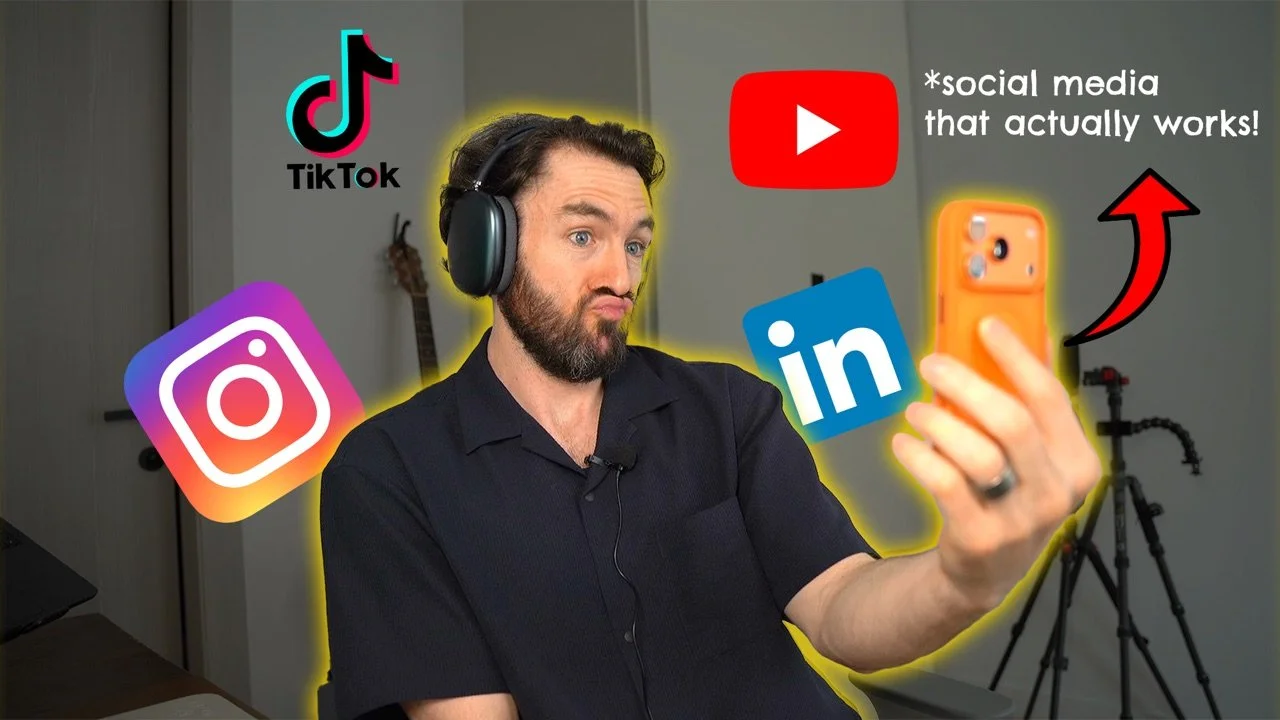
The one goal that matters
Social media has a single job for a therapy practice: build trust with prospective clients by giving them free value.
That’s it. Not memes, not dancing videos, not a polished “welcome to our practice” post. We use the phrase “social media” so broadly that it conjures influencers and entertainment — but for you, there’s a point to it, and the point is trust.
Here’s why that goal is the right one. When I work with therapists, they almost always tell me the same thing: once someone is on a consult call, it tends to go well. They can talk about their style, and the prospective client often becomes a client. The hard part is everything before the call. People book calls with people they already trust — and the most efficient way to build that trust in 2026, primarily through video, is social media.
It’s the top of the funnel, not the finish line
Social media is what marketers call a top-of-funnel strategy. The top of the funnel is the first time someone gets introduced to your business; the bottom is when they become a client. Social media lives at the very top.
That means when someone interacts with your content, they’re usually not going to become a client right away — or even soon. They might watch a video, get something useful from it, watch a few more, visit your website, and eventually book a call. It’s their first hello, not their booking. Treat it that way and you stop measuring the wrong things.
It’s worth naming the one real limitation: most therapists are licensed in specific states, and social media doesn’t respect state lines. Plenty of people who find and enjoy your content won’t be able to work with you. That’s fine. Showing up with value consistently can still open other doors over time — coaching or consulting, for example — and it can also be consumed by folks who do find you locally.
A simple system you can actually keep
The good news is that doing this well is not complicated. There’s a learning curve, but each step is learnable, and once you’re over it the whole thing takes maybe two hours a week.
Start with real value. Don’t guess based on your clinical experience alone — do a little research. Think about your niche and your ideal client, then find the questions they’re actually asking. Browse what’s getting engagement in your space, use a tool like Answer the Public, and Google as if you were the client. The test for any idea: can they apply it the moment they see it?
Pick a frequency you can keep. Weekly is great. Every other week is fine. Choose what you can stick to and pick one topic for each slot.
Write it in your own voice. Turn that topic into an article or outline. These are things you talk about every day, so the information is already yours — just get it down.
Film something simple. It does not need to be polished. A webcam, your notes on screen, an educational or webinar style. Don’t overthink it.
Repurpose everything. One video can become an instagrampost, a blog post, a couple of shorts, and more. One topic can become several pieces of content.
If you’re going to start anywhere, start with YouTube and a blog. YouTube is the second-largest search engine in the world, its content repurposes into everything else, and the article can double as your script — so you can knock both out in one shot.
Play the long game
None of this works overnight. Social media is a long-term strategy, and consistency is the whole point. Show up over a long enough stretch and you’ll start to see it — more website visits, more referrals, and the quiet credibility of being someone a word-of-mouth referral can look up and trust.
So if you’ve been posting into the void, stop optimizing the posting and fix the strategy. Pick one question your ideal client always asks, answer it well, and put it where they can find it. Then do it again next week.
If you want the step-by-step on any of this, join my free community — I answer questions there in depth, practically and tactically.
